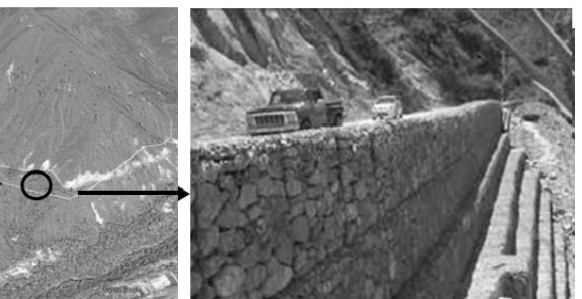
Summary. The work carried out is based on analyzing the numerical geological modeling of the discontinuities present in the rock massif located on the Rafael Caldera highway that is in the State of Mérida, in the West of Venezuela. The methodology applied is based on field reconnaissance and analysis of samples in the laboratory to obtain the geomechanical parameters to be used in the simulation, using the Finite Element method through the commercial program ABAQUSTM. Elastic models are made in two and three dimensions with geometries and physical-natural characteristics obtained during fieldwork. The results show values of Modulus of Elasticity and Poisson ratio according to the bibliographic data for the type of rock present in the area. The distributions of stresses and deformations in the study area are also obtained, determining the geological-structural characteristics of the area together with the geomechanical classifications, estimating the behavior of discontinuities, possible anomalous behaviors, and eventual collapses. The main conclusions point to the geomechanical classification as a good quality rock mass confirmed with simple compression tests. Areas susceptible to plasticity with values close to the non-permitted limits are also analyzed. The area under study is one of the main road arteries in Venezuela, and the economic-environmental impact in the event of a collapse is significant and therefore this sector must be highly controlled.
Published in: Computational Models in Engineering. ISBN 978-980-7161-02-2
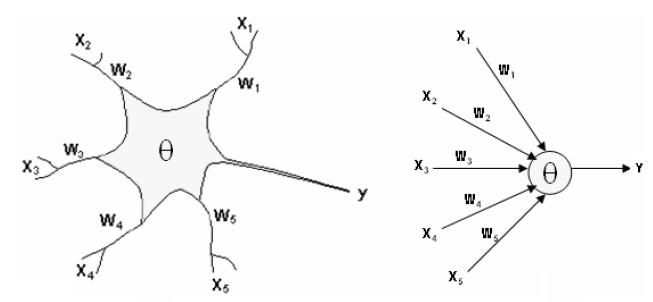
Resumen. Venezuela presenta varias fallas geológicas activas que son causantes de los movimientos sísmicos de diversas magnitudes que se sienten en el país. Una de las fallas más importantes es la de Bocono, la cual se ubica en la región occidental, afectando ciudades como Mérida y Barquisimeto. El objetivo principal de esta investigación es utilizar registros símicos históricos relacionados a la zona de estudio, para la generación de modelos basados en Redes Neuronales Artificiales (RNA) utilizando valores de latitud, longitud, profundidad, tiempo y magnitud. Las RNA son usadas en la búsqueda de patrones y estimación del comportamiento de la falla. En el trabajo se analiza la factibilidad del uso de RNA para este tipo problemas geonuméricos, y se presentan algunos resultados preliminares obtenidos.
Published in: Advances in Computational Simulation and Numerical Modeling. ISBN 978-980-7161-03-9

Summary. The main seismic zone of South America is located on the border of the of the Nazca and South American tectonic plates, directly affecting the coasts of Chile, Peru, Bolivia, and Colombia with the Pacific Ocean. This research Its main objective is to use artificial neural networks to analyze the Relationship between the occurrence of earthquakes and deformation energy calculated in the study area using geomechanical models based on the finite elements. The methodology used is based first on the selection of information on plate tectonics, constituent materials, direction of motion, and subduction, and then the realization of the two- and three-dimensional models that allow Calculate the strain energy using the finite element method. Then Artificial neural networks are used to find the relationship between energy, magnitude of the earthquakes and date of occurrence of the earthquake, in each case using Up to four delays. The results obtained indicate that the performance achieved corresponds to 77.78%, improving to 83.33% with the use of all variables. Of the same In this way, by not using strain energy as input data, it shows a of 0.18 classified as good, with a correlation of 0.98 and an error of 0.14, unlike of results with the use of strain energy that achieve performance and correlation perfect scores of 0.00 and 1.00 respectively and an error of 1.14E-16. The main takeaway from This work points out that the use of numerical methods and intelligent computational techniques They allow us to quantify the relationship between the energy, magnitude, and time of occurrence of earthquakes, achieving minimal errors in the prediction of new earthquakes. Energy concentrations in the South American seismic zone.
Published in: Engineering and Applied Sciences: Mathematical and Computational Models. ISBN 978-980-7161-04-6